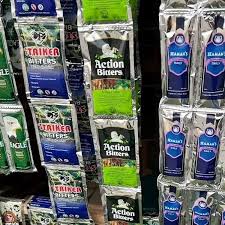

The National Agency For Food and Drugs Admistration Commission, NAFDAC’s decision to ban the production and sale of alcohol in sachets and small bottles (below 200 ml) is not an act of regulatory overreach. It is a long-overdue public-health intervention aimed at protecting Nigeria’s most vulnerable population—our children and young adults. The ban, effective January 2026, is rooted in clear evidence that these small, highly concentrated alcohol sachets fuel addiction, abuse, and a cascade of social problems.
Yet, despite repeated concessions and extensions granted by regulators, manufacturers and sellers continue to resist compliance. Their objections are framed around job losses and economic impact, but beneath the rhetoric lies a troubling reality: profit is being placed above public safety.
Rather than respect a regulation enacted squarely in the public interest, some industry players have resorted to aggressive lobbying, arguing that sachet alcohol improves affordability and moderates consumption. They now advocate alternative measures—such as stricter age enforcement and better labelling—in place of an outright ban. These arguments, however, ring hollow in a country where regulatory enforcement is already overstretched and routinely undermined.
Let us be clear: the resistance to this ban is not about balance or pragmatism; it is about money. Those opposing the policy are effectively willing to trade the health and future of Nigerian children for continued commercial gain. This position reflects a disturbing erosion of moral and ethical responsibility among certain entrepreneurs who view vulnerable youths as a market rather than lives worth protecting.
The debate over sachet alcohol mirrors a broader dysfunction in our society—the persistent clash between economic interests and public-health imperatives. It is the same conflict that has allowed counterfeit drugs to flourish and substance abuse to spiral unchecked. When profit repeatedly trumps protection, society pays the price.
Proponents of sachet alcohol have floated several so-called alternatives: stricter enforcement of age restrictions, public awareness campaigns, promotion of non-alcoholic beverages, and industry adaptation through safer packaging. While these ideas sound reasonable on paper, they collapse under Nigeria’s current realities.
Stricter enforcement, in particular, is the weakest link. Regulatory agencies such as NAFDAC and law-enforcement bodies lack the manpower, resources, and reach to police alcohol sales effectively across a rapidly growing and urbanising population. Even the National Drug Law Enforcement Agency (NDLEA) is overwhelmed by the scale of drug abuse ravaging Nigerian youth.
This crisis is not unique to Nigeria. In the United States, illicit drug epidemics have grown so severe that President Donald Trump has pursued aggressive international measures to curb the inflow of fentanyl, pressuring neighbouring countries and targeting alleged foreign collaborators using sweeping tariffs against its North American neigbors -Canada and Mexico and even Venezuelan in the Carribean where it deployed military force to capture the president Nicholas Maduro and his wife currently on trial in the US for alleged narcotics trafficking offense. If advanced nations struggle to contain substance abuse, expecting Nigeria to succeed through “stricter enforcement” alone is unrealistic.
As the NDLEA tightens its grip on illicit drugs such as tramadol, sachet alcohol has increasingly become the next low-hanging fruit for teenagers bent on self-destruction. Allowing its continued production and distribution only widens the gateway to addiction—one cheaply packaged, highly potent sachet at a time.
This is why the NAFDAC ban must stand. Not as a symbolic gesture, but as a firm statement that Nigeria will no longer sacrifice its children on the altar of profit. Economic arguments cannot outweigh the long-term social, health, and moral costs of inaction. When the choice is between protecting lives and preserving margins, the answer should not be complicated.
As may be recalled, “mkpurumiri”—a street name for a brand of illicit drugs—became popular among youths, particularly in the eastern part of Nigeria. Its widespread use fuelled criminality and, at one point, brought the economy of that region to its knees. A similar situation applies in the northern flank of our country where religious insurgency is wreaking havoc on the populace, just as in the south west street urchins menace also known as ‘Area Boy’ syndrome is assuming alarming if not epidemic proportions. It is therefore a no-brainer to link drug and alcohol abuse directly to crime.
It is also on record that the police, who are responsible for enforcing laws that prevent children from accessing alcohol, are already overstretched and struggling to cope with the surge in crime across society. This reality informed President Bola Tinubu’s recent directive to the Inspector-General of Police, IGP Kayode Egbetokun, to withdraw police officers from VIP duties in order to strengthen frontline crime-fighting capacity, as well as to embark on massive recruitment to boost law enforcement.
That presidential directive underscores the fact that a police force already unable to rein in common criminals is being further stretched by the growing challenge of domestic terrorism, which necessitated the President’s marching orders to recruit more personnel.
In light of these realities, adding the enforcement of a ban on alcohol consumption by children to the responsibilities of an already fatigued police force would amount to an avoidable burden.
The central case against sachet alcohol manufacturing and distribution is simple: it enables easy access and concealment by children, made possible through the small size and discreet packaging of these products. To be fair, retailing goods in smaller packages is a long-established strategy for making products affordable and accessible to consumers with low purchasing power. Experience shows that this marketing approach is driven largely by economic realities.
In Nigeria, the pioneer of sachet-sized retailing was drinking water—popularly known as “pure water”—which is widely sold and consumed by the masses. When first introduced, it sold for as little as ₦5 per sachet and was especially popular among people who earn daily wages and are constantly on the move, as it was both affordable and effective at quenching thirst. Over the years, selling soap, detergents, and similar household items in small sachets has also become a common practice in the marketing of consumer goods.
In the current circumstances of widespread poverty—largely the initial fallout of sweeping economic reforms being implemented by President Bola Tinubu’s administration—micro-retailing has become an inevitable marketing and distribution strategy for moving goods to the lower rungs of the economic ladder. While local and international stakeholders have begun to acknowledge early positive signs of these reforms, the wider population has yet to feel the benefits, particularly through a significant drop in consumer prices.
As a result of these realities, products such as tea, sugar,milk, and other related consumables, which were once available only in large, medium, or standard small sizes, have had to be repackaged into miniature sachets to make them affordable to a broader segment of society.
Consider the low-income tea vendors (mai shayi) operating around motor parks and other public spaces. In the past, milk and sugar—sold only in large packages—were largely accessible to the middle and upper classes. Today, however, harsh economic conditions have made sachet packaging essential. By breaking these products into smaller units, more people can afford them, allowing a greater number of Nigerians to enjoy tea with milk at makeshift roadside stalls located where the working poor live and earn their livelihoods—something that was largely impossible in the past when these commodities were sold only in bulk
Some consumer-goods manufacturers have successfully boosted sales by downsizing their products to suit declining purchasing power. A notable example is the 3-in-One coffee mix, which combines coffee, sugar, and milk in a single ready-to-drink sachet. This model, driven by inflation and reduced consumer income, proved highly effective for fast-moving consumer goods such as water, detergents, milk, and even rice.
However, the decision by alcohol manufacturers to replicate this strategy ignores a critical distinction. Unlike food and non-alcoholic beverages, alcohol is legally prohibited for children. By packaging alcohol in small sachets, manufacturers have created cheap, easily concealed products that make children the most vulnerable consumers. This reality lies at the heart of the case against sachet alcohol.
Given that when becomes a deviant, errant or wayward, the mother often gets blamed, one is surprised that women did not join NAFDAC in wagging the battle against the very powerful alcohol manufacturers that deployed huge resources resisting the ban on alcohol sold in sachets in order to continue expose the lives of young ones to risk of alcoholism.
Not even the ubiquitous civil society organizations that are often quick to champion popular causes were there to speak up for our children who apparently are voiceless and could not lobby the NGOs to rise in their defense.
Clearly, the practice of selling alcohol in sachets violate both the spirit and letter of a United Nations agreement signed by Nigeria in 2010, which restricts children’s access to alcohol. Sachet packaging enables minors to purchase alcohol cheaply, hide it in their pockets, and even take it into classrooms. In effect, this amounts to sacrificing our children for profit.
This debate underscores the difficult balance between economic realities and child protection. While downsizing products is a legitimate response to poverty and inflation, it becomes unacceptable when it exposes minors to harm. Children are the future, and allowing commercial interests to endanger their well-being is morally indefensible.
The ban on sachet alcohol should therefore be seen not as an attack on business, but as a call for innovation. Manufacturers can explore safer packaging, premium products, or non-alcoholic alternatives. In fact, there is a growing market for low- or zero-alcohol beverages, particularly in northern Nigeria, where alcohol consumption is religiously prohibited.
Non-alcoholic beer already exists and could attract consumers who abstain for religious, health, or personal reasons. Instead of exaggerating job-loss fears and resisting regulation, alcohol producers should rethink their business models.
In the lslamic world, there is Halal food business thriving.
And a different type of meat has been created out of vegetables to suit the taste bud of vegetarians.
Many businesses thrive by aligning with ethical values and community needs. Some hotels, even in non-Islamic countries, choose not to sell alcohol and remain profitable. Alcohol manufacturers in Nigeria can do the same by balancing profitability with social responsibility—without placing children at risk.
A brief review of global business practices shows that diversification is neither utopian nor impractical. Alcohol manufacturers have viable alternatives if they choose to explore them. These include premiumisation—focusing on high-end, low-volume products aimed strictly at adults—diversification into non-alcoholic beverages, responsible marketing, and direct community investment that supports children and families.
Many global brands have already embraced this shift. Non-alcoholic drinks such as kombucha and flavoured seltzers are gaining wide acceptance, while Guinness now produces a non-alcoholic variant of its flagship product. The specific direction firms take should be guided by market research, but what cannot be justified is the continued endangerment of children in the name of profit.
Unfortunately, some alcohol entrepreneurs remain fixated on quick returns rather than long-term social responsibility. Their resistance to reform suggests a troubling indifference to the welfare of children—who may well include their own. This mindset reflects a broader moral crisis in a society where the pursuit of money increasingly trumps basic human values.
Even in the face of research demonstrating the harmful effects of sachet alcohol on minors, manufacturers continue to lobby aggressively for its retention. In my view, this places them in the same moral category as purveyors of hard drugs—actors who profit from the slow destruction of young lives, albeit under the guise of legality.
Citing job creation and contributions to GDP does not absolve practices that make alcohol cheap, accessible, and easily concealable for children. Economic activity that undermines the future of a nation’s youth is neither progressive nor defensible.
If alcohol manufacturers are serious about sustainability, the path forward lies in innovation, diversification, and ethical restraint—not in sacrificing children for profit.
So, the ban on sachet alcohol should stand and the executive and legislative branches of government should stop giving oxygen to the sachet alcohol manufacturers deploying huge resources in fighting its ban by not paying attention to their clamour to lift the ban but only if they seek encouragement to innovate or diversify.
In fact in the interest of securing the future of our children the judicial branch should be prepared to apply the full force of the law against sachet alcohol manufacturers and distributors who breach the new NAFDAC law banning it, when they are sued by NAFDAC or class actions are taken by aggrieved or injured parents.
I commend the likes of Mrs Oluwatosin Adeniyi, the wife of my good friend , former presidential spokesman, Thisday newspaper editorial board chairman and prolific author/columnist, Segun Adeniyi.
Her wave making school in Abuja-Not Forgoten Initiative, (NFI) started as a humanitarian gesture by a compassionate woman to rescue children who were apparently without parental care and therefore susceptable to becoming part of the growing number of our children that the society only promises a bleak future , without the intervention of good cause platforms such as the NFl rescuing indigent kids from being destitutes and saving them from being easy recruits into criminal activities by giving them basic education.
Society will be better served if the manufacturers of alcohol in sachets could have deployed or channeled the enormous resources they expended on resisting sachet alcohol ban on good causes such as the NFl which is giving children in the lowest rung of the ladder in our society a chance to survive and contribute to nation building.
Magnus Onyibe, an entrepreneur, public policy analyst, author, democracy advocate, development strategist, an alumnus of the Fletcher School of Law and Diplomacy, Tufts University, Massachusetts, USA, a Commonwealth Institute scholar, and a former commissioner in the Delta State government, sent this piece from Abuja.