
You may or may not have heard of the field of material science but I am going to tell you a bit about it anyway. Material science is the branch of science/engineering that deals with the study of the processing, structure and properties of materials (whether organic and inorganic). It is an important branch of science because the processing, structure and properties of materials to a large extent, determine the uses a specific material can be put to.
Up until very recently (mid to late 20th century) in human history, man was pretty much limited by nature in uses to which he could put different materials to. He had to study the structure and properties of materials (hence the field of material science) to find materials that were amenable to the uses he had in mind.
But what if man could create his own material by putting it together atom by atom? The arrangement of atoms in any material is what ultimately determines its structures and properties, thus determining to what uses a material can be used for. If man somehow could manipulate atoms in a precise manner, he could start at the end by coming up with a use case, then design the perfect material for that use case.
Sounds too good be true? Like science fiction? Well, that science fiction has been slowly but steadily becoming reality since the late 20th century. The theoretical possibilities had already been seen since the late 1950s.
In 1959, theoretical physicist Richard Feynman, who won the Physics Nobel Prize in 1965 for his research into the field of quantum electrodynamics, which is a branch of physics that describes how light and matter interact, gave a lecture titled “There is Plenty of Room at the Bottom”.
He of course, did not mention the word “nanotechnology”, as the word did not yet exist, but he made clear that in principle, precise manipulation of atoms was possible. I have quoted the relevant part of the lecture below:
“The principles of physics, as far as I can see, do not speak against the possibility of maneuvering things atom by atom. It is not an attempt to violate any laws; it is something, in principle, that can be done; but in practice, it has not been done because we are too big.” [end of quote]
It would seem that in the last few decades, humans have been getting smaller.
The next major milestone was the publication of the book, Engines of Creation: The Coming Era of Nanotechnology in 1986 by Eric K. Drexler. He would also start a research institute principally focused on nanotechnology called the Foresight Institute, the same year.
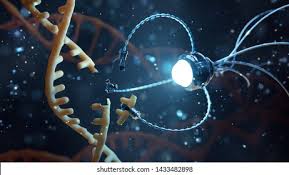
In the book, Drexler laid out a very bold, ambitious but highly speculative vision for the field of nanotechnology that pushed the boundaries of what might be possible in the future. Of particular interest was his focus on molecular manufacturing by self-replicating nanobots. Molecular manufacturing refers to the ability to build complex structures by arranging atoms and molecules precisely. Self-replicating nanobots are very tiny robots (about 1000 smaller than microscopic objects) that are capable of making functional copies of themselves. This ability combined with molecular manufacturing ability enable nanobots to carry out large-scale manufacturing at the nanoscale.
At the time when Drexler wrote about self-replicating nanobots in the 1980s, they did not exist. Scientists, however have recently been able to successfully design self-replicating nanobots but they almost certainly remain at the experimental stage.
If nanotechnology does become mainstream, it would radically transform human existence like nothing before it. Nanotechnology has very wide ranging applications in areas such as medicine, pharmaceuticals, electronics, energy, environmental science, material science (of course), manufacturing, computing, wireless telecoms, flight and space exploration etc. Below are some specific applications in different areas:
Medicine:
- Nanomaterials for making targeted delivery systems for drugs/vaccines (used for covid-19).
- Nanoparticles used in medical imaging and as biosensors for early detection of disease.
- Nanoparticles that enable the field of theranostics which merge therapy and diagnostics.
- Nanomaterials that repair or regenerate tissue.
Environment:
- Nanomaterials for making smart windows, solar cells and low-carbon concrete for combating climate change.
- Nanomaterials like carbon nanotubes and graphene oxide are used in water purification as filers and desalination membranes
- Nanomaterials are used to capture or neutralize pollutants
- Nanosensors can be used for environmental monitoring as they can detect extremely low concentrations of environmental pollutants
Electronics:
- The microprocessors in computers and smart phones are increasingly made up of nanoscale transistors
- Nanomaterials like carbon nanotubes and graphene are used to make flexible and wearable transistors
- Nanoparticles are used to make high density storage disks
- The use of nanotechnology enables faster charging, higher capacity, and longer life in electronic devices
Agriculture:
- Nanocarriers are used for targeted pesticide delivery systems that minimize environmental impact
- Nanofertilizers are used for the precise delivery of fertilizers
- Nanobiosensors are used for soil and plant monitoring
- Nanomaterials lcan be used to bind toxic substances in soil and improve fertility.
Construction
- Nano-silica can be used to enhance concrete and cement
- Carbon nanotubes can be used to make high-performance steel
- Nano –ceramics can be used to improve rust resistance
- Nano-clay composites can improve fire resistance in building materials like paints and polymers.
Unsurprisingly, the world’s major research centers are located in the US, Europe and East Asia. Here in Nigeria, the National Agency for Science and Engineering Infrastructure (NASENI) has a Centre of Excellence in Nanotechnology and Advanced Materials (CoEx‑NA) in Akure. Research in nanotechnology takes place across multiple Nigerian institutions—such as University of Nigeria, Nsukka; Covenant University; LAUTECH; University of Ilorin; and University of Lagos.
The research that goes on in the world’s major research centers has been more grounded and practical than the speculative visions outlined in Eric Drexler’s Engines of the Future but now that we are beginning to have actual self-replicating nanobots, perhaps things are about to get more exciting.
Let’s hope they don’t turn deadly and begin to hunt us as they did in novelist Michael Crichton’s (author of Jurassic Park) thriller Prey.
Bibliography
- There is Plenty of Room at the Bottom
- Drexler, Eric 1986. Engines of Creation: The Coming Era of Nanotechnology
- Modernsciences.org