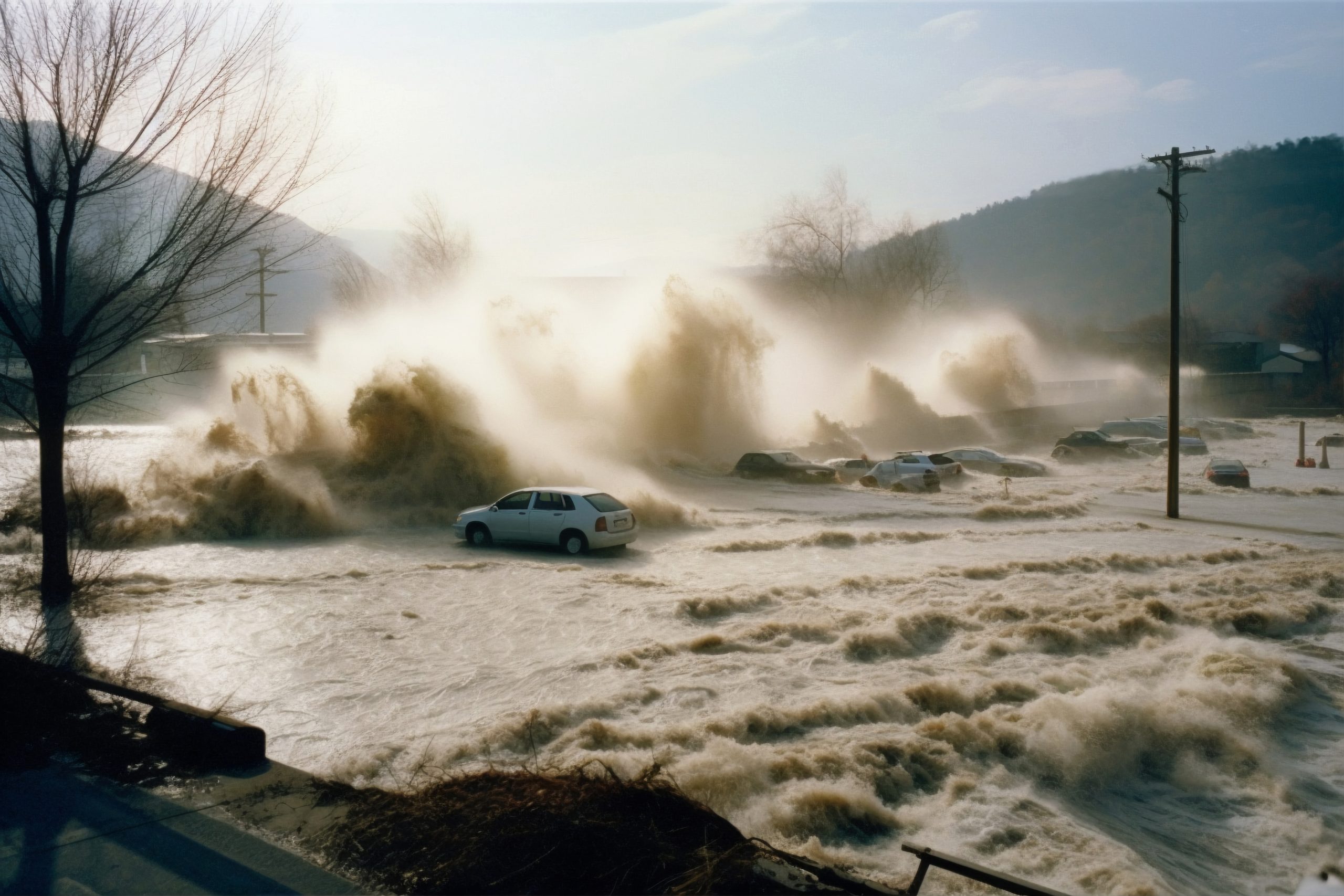

Nigeria keeps scoring FFF. Every rainy season, the report card comes back the same, and nobody in charge seems the least bit embarrassed.
At FGC Odogbolu, the Principal would sometimes take the assembly podium with a particular look on his face. Someone, he would announce, had managed, with rare and uncanny talent, to score FFF in the A-level examinations. Three subjects. Three Fs. No mean feat.
Fail, Fail, Fail. We laughed; the way school boys laugh at anything that isn’t happening to them. But the three letters stuck. Long after that student had moved on, FFF lived in the dormitories as our shorthand for total failure. Not a bad day. A clean sweep.
I picked this title on purpose. I want to say, without dressing it up, that the people running our government have failed. Federal, state, local. All levels.
THE RAINS CAME, AS THEY ALWAYS DO
The rains are here. They were always going to be here. Lagos has had a rainy season for as long as there has been a Lagos, and still we act surprised every single year.
Roads are underwater. Homes are underwater. We grumble for a second, hitch up our trousers and wade through water up to the waist. Those who can afford SUVs find their vehicles now have two jobs: climbing out of craters on dry days and fording rivers on wet ones. Nobody calls a Jeep a luxury anymore. It is survival equipment.
We dig gutters along the roadside and connect them to nothing. No outfall, no canal, no gradient worth the name. So, the water sits. It turns black, then green, and becomes a breeding ground for mosquitoes and everything else you’d rather not picture, right beside the Buka where people eat lunch. Then we stuff what’s left with nylon bags and sachet-water wrappers into our drainages or drop by them on the roads and act shocked when the next downpour has nowhere to go.
Yes, Lagos is low and flat, with a lagoon in its belly and the Atlantic at the door. That’s geography, not destiny. Amsterdam sits lower. Singapore gets more rain. The difference is that somebody there plans for the water, maintains the drains, and loses their job when they don’t.
THE NEW ECONOMY OF FLOODS
Enterprise never sleeps in this city, so the floods have built their own market. You can now hire a water pump by the day. In some neighborhoods, you can rent a canoe. I wish I were joking.
Office workers check the weather forecast before deciding whether to leave the house. Not for comfort. A two-hour downpour can mean five hours trapped on a flooded road, or stranded in a danfo that drowned its engine at Ojuelegba. COVID didn’t invent remote work in Lagos. Bad drainage did.
Add it up: man-hours lost, engines ruined, shop stock soaked, children sick from stagnant water. Somebody pays for every one of these failures. It is never the people responsible.
Every Nigerian household is now its own local government. We generate our own power, sink our own boreholes, hire our own security, tar our own roads. Then we pay our taxes anyway.
WE ARE WATCHING. WE ARE LOOKING.
So, what exactly are our state and local government officials doing? The ineptitude is staggering.
Ozumba Mbadiwe Avenue in Victoria Island, one of the main arteries feeding the Lekki–Epe Expressway, is breaking up. We are watching.
Herbert Macaulay Way in Yaba, which carries traffic between Ikorodu Road and the Third Mainland Bridge, is going the same way. We are looking.
Roads don’t collapse overnight. They send warnings. Hairline cracks first, then potholes, then craters that eat tyres and swallow axles. Water is the chief culprit: a road without working drainage is a road with an expiry date. Every stage of that decline is pain to anyone who drives past, including the officials whose convoys use the same roads, sirens blaring.
Then there is the Lagos–Calabar Coastal Highway. Whatever you think of the project, it has changed how water moves along that stretch of coast. Natural drainage paths have been cut off, and the communities on the landward side, toward Victoria Island, are paying for it with flooded homes. The environmental impact assessment, such as it was, showed up after the bulldozers. That’s backwards. You study where the water goes before you lay hundreds of kilometers of concrete across its path, not after families start bailing out their living rooms.
THIS IS NOT JUST A LAGOS STORY
It would be convenient to call this a Lagos problem. It isn’t. FFF metastasized and has spread to every corner of the country.
In 2022, floods caused by heavy rains, the Lagdo Dam water release, inadequate urban drainage, poor runoff management, and housing developments on natural floodplains killed hundreds of Nigerians and displaced well over a million, and also resulted in the loss of tens of thousands of hectares of farmland. In September 2024, the Alau Dam gave way near Maiduguri and large parts of the city went under. In May 2025, a flash flood ripped through Mokwa in Niger State and took more than two hundred lives in a single night. Even our dear, supposedly well-planned Abuja enjoyed its own dose of flooding this year. North, South, East, West, the stories rhyme. Dams nobody maintained. Warnings nobody acted on. Waterways built over, and drainages blocked, with approval or without it, and nobody asking questions.
And it isn’t only water. Power, roads, water supply, health, schools. Sector after sector has caved in, and citizens are spending fortunes to keep the wheels turning.
THE POLITICS OF EVERYTHING
What really confounds me is how we now politicize everything. Flood relief, road contracts, even who is allowed to complain. At this rate we will soon question why people outside our political circle are having children.
Our politics rewards incompetence. Non-performance has become a qualification, sometimes the only one, for appointment. And the bar keeps dropping. Those who came before performed woefully and faced no consequences, so the incoming crop has no reason to do better. The few who genuinely care end up shouting themselves hoarse, or quietly joining the system they set out to fix.
Which brings me to the question that won’t leave me alone. If you get into office and you’re not allowed to work, why not resign? Is the lucre of office so irresistible that everything else – your name, your conscience, the people who trusted you – can be sacrificed for it? I know I am being naïve. Leave me.
Local government chairmen, the officials closest to the drains and the streets, spent years blaming state governments for starving them of funds. In July 2024, the Supreme Court ruled that their allocations must be paid to them directly. So, to any council chairman whose gutters still lead nowhere: what’s the excuse now?
THREE MONTHS OF WAITING
I started writing this piece about three months ago. Then I stopped, because repair work began on Ozumba Mbadiwe, and I thought, fair enough, let’s give them a chance. A few days later, the workers packed up and never came back. The road now shows everything an engineer dreads: surface pitting, pockmarks, sections giving way, subsurface failure creeping up from below. The palliative, it turns out, was mostly for us.
So here we are. Wading through our floods. Enduring our failures. Frittering away our fortunes on food, fuel and fixes, in a country where food inflation has hit record highs and a litre of petrol costs several times what it did three years ago.
Floods. Failures. Fortunes.
Back at Odogbolu, an FFF was something a student had to live down. In Nigeria, it has become our collective score. And unlike that unfortunate A-level candidate, the people who earned it don’t even look ashamed.