
” To be a Christian is not to be religious in a particular way – – – but to be a human being” – Dietrich Bonhoeffer
Peter B. Ogbobine Esq .
On 3 May 2026, almost every major Nigerian newspaper carried the same story: celebrated actress and filmmaker Funke Akindele no longer attends church on Sundays. Her reason, as reported, was the discomfort and relentless glare of media attention, which made genuine devotion almost impossible. But beneath the celebrity angle lay a question far older, far more personal, and far more consequential than any newspaper headline: if a believer stops attending church on Sunday, does that absence cost them their salvation? It is a question I have also been living and grappling with lately.
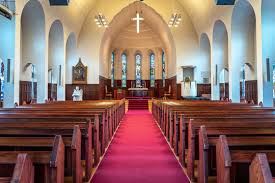
Like Funke Akindele, I have recently stopped attending Sunday church service — or attend only sparingly — but my reasons are entirely different, and that difference matters. Her absence is circumstantial. The church building, for someone of her fame, has become an uncomfortable stage. Her faith, I assume, remains intact; she has simply found that worshipping God sincerely is no longer possible in a room full of people taking pictures of her. My absence, however, is theological. It is the product of long reflection and an honest reckoning with what Nigerian church culture has become. The older, established churches can feel suffocatingly rigid: the same liturgy, the same responses, the same thing repeated every Sunday without variation or evident spiritual hunger. The newer, louder churches present a different but equally serious problem — they have become transactional. Give money, receive miracle. Sow a seed, reap a blessing. The altar has been quietly converted into a marketplace, and the pastor installed and worshipped as a god. My faith is absolutely intact also. Whether such environments are places where God is genuinely being sought is a question each person must answer through honest personal reflection and circumspection.
Remarkably, we have both arrived at the same practical destination: online worship, conducted privately, from home. The question must therefore be asked plainly: does Sunday church attendance — physical and communal — determine whether a soul receives salvation or not?
From my reading of Scripture, this question does not yield a single clean answer. On one side stands 1 Corinthians 6:19-20, which declares the body of the believer to be a temple of the Holy Spirit. This is a deeply personal statement. It locates God’s dwelling place not in any building but within the individual. If God already inhabits the believer, then the place of worship is carried in the believer at all times, and the church building, under this line of thought, becomes a convenience rather than a necessity. On the other side stands Matthew 18:20 — “where two or three gather in my name, there I am with them” — which suggests that communal gathering generates a quality of divine presence distinct from solitary devotion. Hebrews 10:25 goes further, warning explicitly against ” neglecting to meet together” and framing communal worship not as optional enrichment but as something the faithful are urged not to abandon. Both positions are rooted in Scripture. The honest conclusion is that the Bible affirms both the interior, personal dimension of faith and its communal, outward expression, and that collapsing one into the other distorts the full picture.
This tension is not new; Christians – as far back as the Pilgrim Fathers – have wrestled with it in every century. In recent times, however, it has been given a concrete contemporary answer. Church authorities in Nigeria have more or less formally acknowledged, born of necessity during the COVID-19 pandemic and advancements in electronic media technology, that sincere worship at home — including online services — is a legitimate form of Christian devotion. The message is simple but significant: the Grace of God is not confined to a building. In my lay view, worshipping online genuinely and living according to the Gospel is not outside the faith. A screen cannot replace everything that communal worship offers — the accountability, the service, the fellowship — but the rigid choice between attending in person or being spiritually absent is no longer the only option available to the Christian.
The answer, then, is this: Sunday church attendance does not determine salvation. What determines salvation, in my view, is the sincere orientation of the heart to God — expressed in genuine worship, living faith, and love of neighbour; worshipping, as John 4:24 puts it, ” in spirit and in truth”.
IN SPIRIT : worship is not confined to a place, a ritual, or a form. It flows from the inner being, through the Holy Spirit, in sincere and genuine connection with God.
IN TRUTH: worship aligns with God’s revealed character and Word, rejecting hypocrisy, falsehood, and man-made traditions not rooted in Scripture.
These things can be nurtured in a church building. They can equally be nurtured at home. God is not a class attendance monitor. I do not believe He will withhold salvation from Funke Akindele, nor from me, who finds it hard to stomach the prosperity gospel or endure the numbness of empty ritual. What He has always asked for is the heart.
Two Nigerians — one a celebrated public figure, the other an ordinary me. Two different reasons for the same empty pew. One stays home because the congregation cannot stop staring. The other in me, because the church has, in my personal assessment, lost its way: deadened by empty ritual or corrupted by commercial religion. Neither of us is damned for it. The Church, at its best, is a servant of grace — not its gatekeeper. As Romans 5:20 reminds us, where sin increased, grace abounds all the more to those who sincerely seek God, whatever the address, whatever the headline.
I am neither a pastor nor a priest. I write this out of personal conviction and claim no higher theological authority than anyone else. I know that many Christians will disagree, because for them Sunday attendance is a cherished expression of faithful piety and devotion. I respect that. Roman law said_” suum cuique”— “to each his due”. The French say ” chacun à son goût – ” each to his own taste”. Both sentiments find their echo in Romans 14:5: “One person considers one day more sacred than another; another considers every day alike. Each one should be fully convinced in their own mind.”_
To you your own. To me my own.
” God is not worshipped in stone temples made by human hands, but in the hearts of those who love him” – Augustine of Hippo