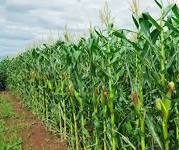

TELA is a new genetically engineered maize variety that is changing the fortunes of Nigerian farmers for the better. TELA, which comes from the latin word tutela, which means “protection”, has been engineered to be both drought and pest resistant. TELA got a chance to prove itself in mid-2024 in Bida, Niger state, when the rains failed to fall for over two months. Many a famer’s crops failed during this trying period, but a few that had planted the TELA variety not only survived but thrived. Some farmers at the time noted that armyworms that used to destroy their fields stayed away because of the TELA variety.
TELA maize was released in Nigeria in 2024, as part of the TELA maize programme organized by the African Agricultural Technology Foundation (AATF) in partnership with local research institutions. It is a genetically improved hybrid developed to withstand drought and fight key pests like the fall armyworm and stem borers. It has also been shown to deliver up to 54 per cent higher yields compared to conventional varieties.
The four hybrids officially launched in 2024 have already been distributed in major maize-producing states and some farmers have more than doubled their yields, since switching varieties.
TELA has been a lifeline for many smallholder farming practitioners since its introduction. Nigerian farmers have in recent times, been facing worsening droughts and pest infestations. Studies estimate that up to 80 per cent of farmers experience yield losses during prolonged dry spells, with incomes dropping by as much as 50 per cent.
Through the combination of science and traditional farming, TELA maize has helped smallholders maintain steady yields despite climate stress. The four hybrids — SAMMAZ 72T, 73T, 74T and 75T — are already performing well in the field and available through licensed seed companies in states like Kaduna, Niger, Kano, Bauchi, Oyo and Nasarawa.
AATF collaborates with the National Agricultural Seed Council (NASC) to ensure that every seed sold is authentic and certified. Farmers can verify authenticity via SMS or a mobile app. AATF plans to reach millions of farmers over the next few seasons. To achieve that goal, it has partnered with local organizations like Sahel Agriculture and Ecobasic Seed Company, to scale up production in order to meet rising demand.
Use of the TELA variety means that farmers spend less on pesticides, preserve soil health, and reduce environmental pollution. It also cuts down post-harvest losses, ensuring more grain reaches markets and households. Cooperative groups are pooling resources to buy TELA seeds collectively. This will broaden usage.
TELA Maize is helping farmers adapt to climate change while strengthening national food security. As Nigeria continues to face unpredictable weather patterns and food supply challenges, the story of TELA Maize underscores the growing importance of agricultural innovation. In the combination of science and traditional farming, TELA Maize is answering that call.
Background
TELA Maize and its deployment are the product of a multi-national collaboration involving western biotech companies, agricultural research institutes and donor organizations, a continent-wide coordinating foundation, and local universities and regulatory bodies.
The genetically engineered drought and insect resistant genes were developed by American biotech company Monsanto (acquired German chemical giant Bayer in 2018), using the proprietary Bt gene technology. The Mexican agricultural research institute Centro Internacional de Mejoramiento de Maíz y Trigo (CIMMYT) inserted the drought and insect resistant gene traits developed by Monsanto into maize varieties adapted to African ecological conditions. The Bill and Melinda Gates Foundation and United States Agency for International Development (USAID) provided funding and technical backing.
The deployment of TELA maize around Africa was coordinated by AATF. It worked with CIMMYT and a number of universities and research institutes in various African countries to adapt TELA maize to local conditions. In Nigeria, its major partner was Institute for Agricultural Research (IAR), Ahmadu Bello University, Zaria. IAR led the release and testing of TELA maize hybrids in Nigeria. This entailed conducting field trials and performance evaluations; releasing four transgenic drought-tolerant and insect-protected TELA maize hybrids in January 2024; ensuring adaptation to Nigerian agro-ecological zones.
For regulatory oversight, a number of regulatory bodies were involved. These included the National Agricultural Biotechnology Development Agency (NABDA), which provided scientific oversight and supported biosafety processes; the National Centre for Genetic Resources and Biotechnology (NACGRAB), which registered and named the varieties for Nigerian farmers; the National Biosafety Management Agency (NBMA), which approved the varieties as safe for cultivation and consumption.
A 2024 study found that TELA maize hybrid SAMMAZ 75T delivered 5.09 tons/ha, compared to 3.30 tons/ha from conventional varieties — a 54% increase. It was also discovered that farmers earned about ₦3.16 million per hectare, significantly higher than traditional maize. Pest-related damage was also cut sharply, lowering the need for chemical pesticides.
In closing, TELA maize represents a biotech solution to Africa’s maize production challenges, combining higher yields, pest resistance, and drought tolerance. In Nigeria, it has been proven to lift farmer incomes and reduce crop losses. While long-term debates about GMOs continue, regulatory bodies have confirmed its safety, and adoption is expanding as farmers seek climate-resilient crops.