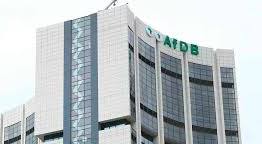

The African Development Bank (AfDB) recently published its African Economic Outlook 2026 report. One of the highlights reported on Nigeria was that its economic growth may slow to 3.7% in 2027, as a result of falling oil prices, thus reducing external revenue inflows.
The report also noted that Nigeria’s growth would rise marginally from an estimated 4.0 per cent in 2025 to 4.1 per cent in 2026. The anticipated growth in 2026 will be driven by increasing oil prices and production, expansion in the services sector, and increased public investments in electricity, transport, and logistics.
The bank unsurprisingly had a lot to say on Africa, with its views being rather grim. The bank warned that Africa’s medium-term outlook remains vulnerable to supply chain disruptions, inflationary pressures, exchange rate depreciation, and tightening global financial conditions.
According to the report, higher fuel and fertilizer prices could weaken agricultural output, increase food insecurity, and worsen inflation across the continent.
The institution stated that elevated inflation could force African central banks to tighten monetary policy further, thereby weakening growth through reduced lending to the private sector.
It added that prolonged global shocks could heighten debt vulnerabilities, increase borrowing costs, weaken fiscal balances, and constrain public investments and social spending across African economies.
The bank urged African countries to adopt coordinated fiscal, monetary, and structural reforms to cushion the impact of recurring global shocks.
The bank also called on African countries to improve domestic resource mobilization, broaden tax bases, digitize tax administration, and strengthen transparency and accountability in the use of public resources.
According to the report, African economies also need to strengthen their capacity to attract and retain external financial flows, especially in emerging sectors such as renewable energy and data centres.
The AfDB stated that preserving macroeconomic stability and deepening domestic financial markets would be critical to sustaining investor confidence and avoiding capital reversals.
The institution further advised African countries to deploy proactive crisis response measures, including contingency financing arrangements, diversified sourcing of fuel and fertilizer, and temporary liquidity support for distressed businesses.
Returning to the subject of Nigeria, the clarion call for Nigeria to diversify its revenue base in order to reduce its dependence on oil receipts has long been sounded. Recent efforts by the government to do just that include efforts at agricultural revitalization though programs like the Anchor Borrowers’ Program (ABP) provide credit and inputs to smallholder farmers, boosting rice, cassava, and cocoa production; promotion of the local production of textiles, cement, and processed agricultural goods to reduce import dependence and expand exports as captured by the Tinubu administration’s Nigeria Industrial Policy 2025, the official roadmap for industrialization and diversification; government policies encouraging fintech and digital entrepreneurship, and Nigeria’s tech ecosystem in general; and energy transition frameworks, shifting focus from fossil fuels to renewable energy, with the aim of mitigating shocks from oil price volatility.
In the long term, to put Nigeria on the path of solid economic growth, it would have to restructure the economy in order to carry out the following:
- Incentivize value-added processing rather than raw commodity exports.
- Invest in power supply, transport networks, and industrial clusters.
- Support SMEs in manufacturing and agro-processing to absorb labor.
- Strengthen education and vocational training to match labor market needs, with a focus on STEM and digital skills to prepare youth for tech-driven industries.
- Prioritize labor-intensive sectors like agro-processing, construction, and light manufacturing.
- Encourage entrepreneurship through access to finance and regulatory reforms.
- Develop green jobs in sustainable agriculture, recycling, and clean tech.
- Ensure consistent policies to attract foreign investment.
- Strengthen institutions to reduce corruption and improve transparency.
In a nutshell, Nigeria’s economy must shift from being oil-revenue dependent but job-poor to being diversified, industrialized, and job-rich. This requires sustained investment in agriculture, manufacturing, technology, and renewable energy, alongside strong governance reforms. Doing so will enable Nigeria to broaden the tax base. This would provide a more predictable and diversified stream of government income, and help fund essential services (healthcare, education, infrastructure) even during oil price downturns.