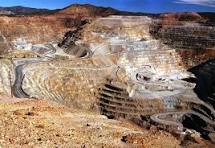

Nigeria is said to possess great mineral wealth, with vast deposits of gold, lithium, limestone, gemstones, tin, columbite etc. Given Nigeria’s vulnerability to external shocks as a result of the monoculture of deriving export revenues almost exclusively from crude oil sales, it is a no brainer that Nigeria ought to fully harness mineral wealth potential in order to diversify its sources of forex.
Unfortunately, as a result of weak regulatory and institutional oversight, the reaping of the benefits of Nigeria’s mineral wealth potential has largely gone to criminal networks as opposed to the law-abiding citizens of Nigeria.
Who or what are these criminal networks? Well perhaps it might be wise to back up a bit by a few decades because their nature isn’t fixed but has been constantly evolving through time.
One can trace the beginnings of these criminal networks to the 1990s. At this time the networks were largely informal, composed of artisanal and small‑scale miners, who often operated illegally in gold‑rich states like Zamfara and Kaduna. In due time, informal smuggling routes emerged, with minerals sold to foreign buyers without documentation. This was the modus operandi of illegal miners in the 1990s through to the 2000s.
In the 2010s, the criminal networks began to get organized and undergo various forms of corporatization. They began using shell companies and special purpose vehicles (SPVs) to acquire mining licenses. Illegally mined minerals began to be laundered into formal supply chains by blending illicit output with legal production. The increasing formalization allowed politically exposed persons, and undisclosed foreign to get involved unnoticed in illegal mining activity. The shell companies, SPVs, and layered corporate structures obscure the natural persons who ultimately own or control extractive assets.
By the 2020s, the networks had become transnational organizations, laundering their proceeds through Dubai, China and other international hubs while engaging in massive trade misrepresentation.
There are known regional hotspots for illegal mining in Nigeria. In some of them like the North-West, as much as 80% of the mining is illegal. Below is a table of some of the most notorious states, the major mineral mined, the nature of criminal activity and its impact on the economy/environment/society.

Overall, the adverse impact is such that the sector contributes only about 0.72% of GDP despite vast deposits of gold, lithium, limestone, and gemstones. Criminal infiltration of the industry enables under‑reporting of production and export mispricing, thus leading to serious loss of revenue in the billions. Mining zones in Zamfara, Katsina, and Kaduna have become flashpoints for violence, with criminal groups financing armed activity through illicit mineral trade, and finally the opaque nature of the industry discourages legitimate foreign investment.
Now, the government hasn’t been sitting idly by and letting criminals have a field day. Special enforcement units are deployed to crack down on illegal operators. As at the time of writing, over 142 suspects were facing trial for illegal mining activities, with hundreds of illegal miners apprehended nationwide.
Persuasion has been applied to the legal artisanal miners to engage in more formalization in order to enable better regulation of the sector. As at time of writing, more than 300 artisanal mining cooperatives have been formed to integrate informal miners into the legal system.
Regulators like the Nigeria Extractive Industries Transparency Initiative (NEITI) have increasingly put in place mechanisms for beneficial ownership disclosure. Such reforms aim to enforce disclosure of true owners of mining licenses, hiding behind shell companies and SPVs.
Efforts have been made to unify data across MDAs with partial/overlapping oversight over the sector like the Ministry of Solid Minerals Development, Mining Cadastre Office, Customs, and Nigeria Financial Intelligence Unit (NFIU). Efforts have also been made in local community engagement.
Despite the laudable efforts on the part of the authorities, much remains to be done. Agencies still operate in silos, limiting enforcement efficiency. Beneficial ownership checks rely heavily on self‑declaration, thus verification remains weak. Integrated sector‑wide digital systems need to replace manual record‑keeping and fragmented data silos.
So all in all, I think kudos should be given to the authorities for tackling head-on the beast of illegal mining, but a long hard slog still awaits.