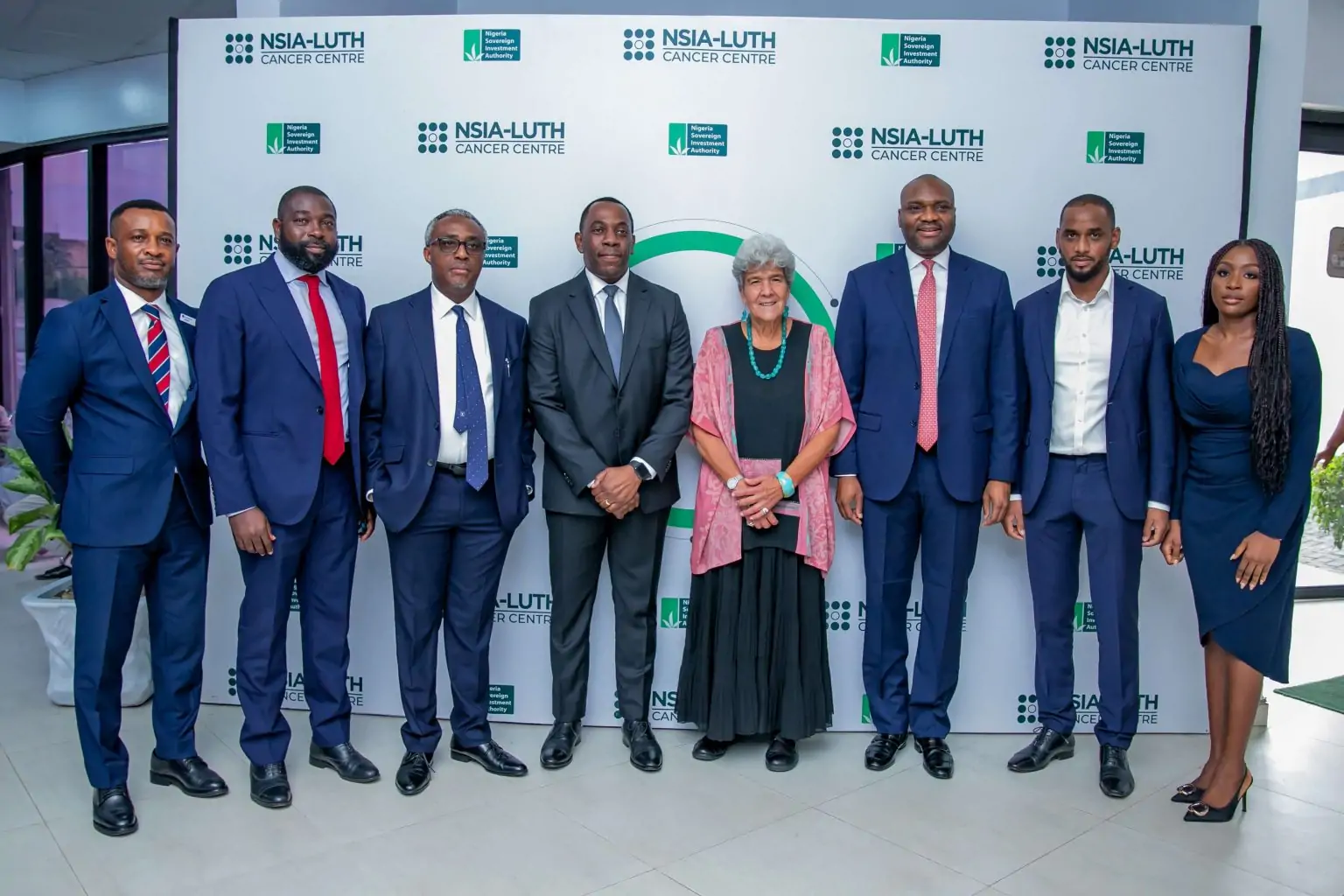

The Nigeria Sovereign Investment Authority (NSIA) has reported a rise in its net asset value to N4.88tn for the 2025 financial year. The rise was driven by improved earnings, disciplined investment strategy, and sustained growth across its portfolio. It also reported that total assets grew by 10.9 per cent year-on-year to N4.91tn.
In dollar terms, the authority’s net assets climbed by 19.8 per cent to $3.4bn, a reflection of the robustness of its diversified global portfolio and consistent capital growth, despite a volatile global and domestic macroeconomic environment.
The NSIA’s Managing Director, Aminu Umar-Sadiq also noted that the fund’s profitability improved significantly, with Return on Equity rising to 10.5 per cent from 7.2 per cent in 2024, while Return on Assets increased to 9.9 per cent from 7.1 per cent.
Umar-Sadiq further noted that the Authority has grown its net asset value from an initial $1bn seed capital to $3.4bn over 13 years, representing a compound annual growth rate of 10.7 per cent.
The NSIA operates three core funds – the Stabilization Fund, the Future Generations Fund, and the Nigeria Infrastructure Fund – designed to support economic stability, intergenerational savings, and domestic infrastructure development.
The NSIA has begun to expand beyond making financial investments. The authority expanded its investments across key sectors, including healthcare, energy, agriculture, housing, and technology. To this end, the authority partnered with the Japan International Cooperation Agency to launch a $50m impact fund targeting Nigerian startups across sectors such as healthcare, agriculture, education, and energy.
Having maintained profitability every year since its inception, even during periods of global economic shocks, NSIA remains focused on portfolio diversification, risk-adjusted returns, and catalytic investments to drive long-term economic growth while preserving capital for future generations.
Background
Sovereign Wealth Funds (SWFs) have come a long way since the Kuwait Investment Authority (KIA) was set up in 1953, making it the oldest SWF. KIA was set up to manage Kuwait’s oil revenue surpluses prudently and diversify wealth away from dependence on hydrocarbons. While it can’t be said with exact precision, KIA is estimated at the time of its inception to have had hundreds of millions of dollars in assets under management.
From that inauspicious beginning SWFs grew to manage numbers in the low billions of USD, in the 1960s, then hundreds of billions of dollars in the 1970s, to just under a trillion in the 1980s. In this roughly 30-year period, SWFs were mainly concerned with stabilizing economies against oil price volatility, and preserving wealth for future generations in resource dependent countries. Today, SWFs with assets under management of about $13-$14 trillion, have become a lot more aggressive, moving beyond their original mandate of stabilizing economies to having diversified portfolios spanning equities, real estate, infrastructure, and private equity. KIA itself has grown to manage about $1 trillion in assets under management in 2025.
Among Africa’s major SWFs, NSIA is considered to mid-sized. The table below shows the major African SWFs and their asset values for the year 2025:
| Country | Fund | Assets Under Management (2025) | Notes |
| Nigeria | Nigeria Sovereign Investment Authority (NSIA) | $3.4 billion | Grew 19.8% from 2024; focused on stabilization, savings, and infrastructure. |
| Angola | Fundo Soberano de Angola (FSDEA) | $4.19 billion (June 2025) | Oil‑funded; invested in tech, hotels, agriculture, infrastructure. |
| Botswana | Pula Fund | Around $4.0 billion (May 2025) | Diamond‑funded; strong governance, rules‑based withdrawals. |
| Ghana | Ghana Infrastructure Investment Fund (GIIF) | Around $345 million anchor equity (no major growth reported by 2025) | Focused on energy, transport, PPP projects; relatively small. |
| Senegal | Fonds Souverain d’Investissements Stratégiques (FONSIS) | $1.23 billion (July 2025) | Invests in agriculture, energy, industrial projects. |
| Morocco | Ithmar Capital | Around $3 billion (end of 2024, carried into 2025) | Strategic fund for tourism, renewable energy, infrastructure. |
Nigeria’s SWF is larger than Ghana’s and Senegal’s, comparable to Morocco’s, but smaller than Angola’s and Botswana’s. NSIA is seen as a benchmark for balancing stabilization with development, especially in infrastructure while Botswana leads in governance and Angola in sheer oil‑funded scale.